Are you interested in economic and financial news?
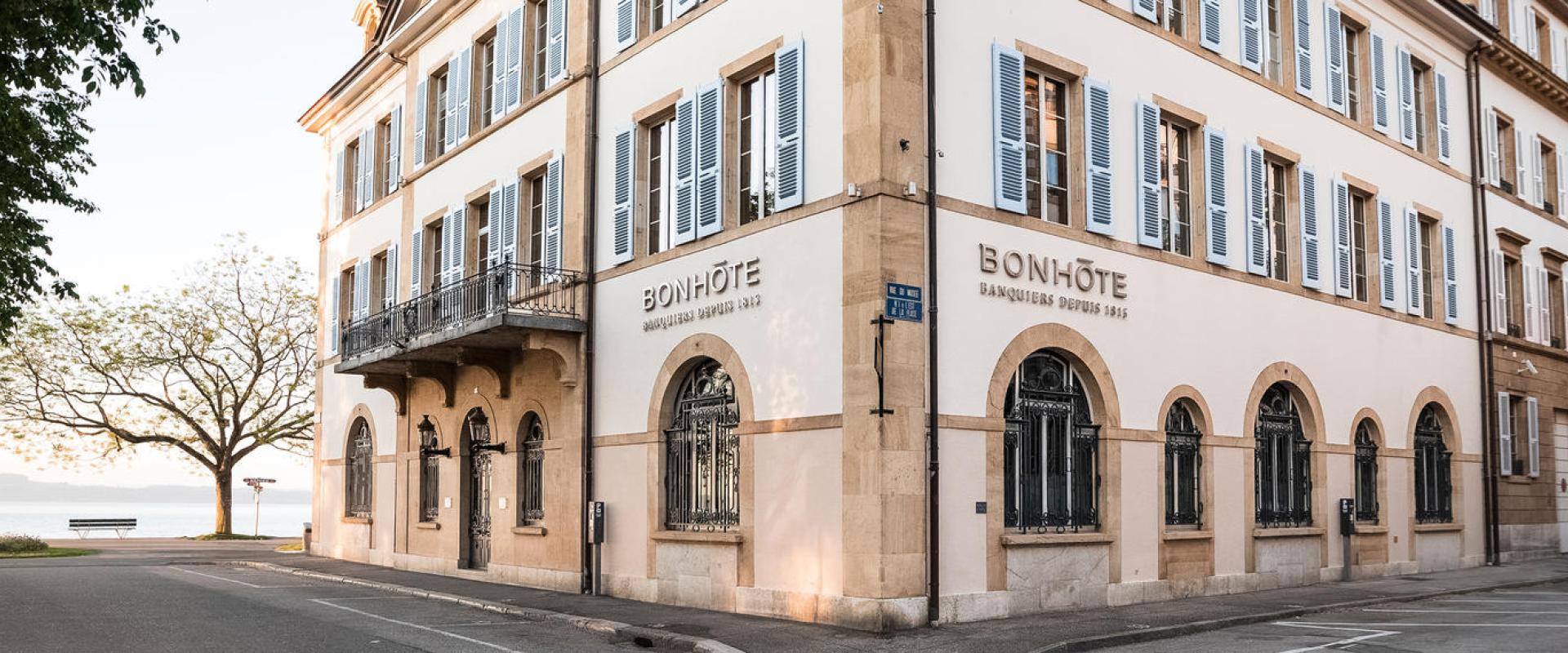
Bank Bonhôte is pleased to welcome you and puts at your disposal its finance experts.




–
USD/CHF | EUR/CHF | SMI | EURO STOXX 50 | DAX 30 | CAC 40 | FTSE 100 | S&P 500 | NASDAQ | NIKKEI | MSCI Emerging Markets | |
|---|---|---|---|---|---|---|---|---|---|---|---|
Latest | 0.78 | 0.92 | 13'100.63 | 5'911.53 | 24'338.63 | 8'112.57 | 10'233.07 | 7'398.93 | 26'247.08 | 62'713.65 | 1'711.25 |
Trend | 3 | 3 | 3 | 3 | 3 | 2 | 2 | 1 | 1 | 1 | 1 |
YTD | -2.05% | -1.74% | -1.26% | 2.07% | -0.62% | -0.45% | 3.04% | 8.08% | 12.93% | 24.58% | 21.85% |
(values from the Friday preceding publication)
US: Markets remain driven by AI despite inflationary pressures
–
The mixed developments regarding Iran have shaped the macroeconomic landscape. On one hand, U.S. statements hinting at a potential agreement with Tehran and a gradual normalization of traffic through the Strait of Hormuz led to an initial easing in oil prices and sovereign bond yields. On the other hand, the resumption of military exchanges in the Persian Gulf quickly reignited inflation fears. Brent and WTI are now holding above $100 per barrel, a level that is beginning to seriously concern central banks and bond markets.
Consequently, after a period of easing, U.S. yields have started to rise again. The 30-year U.S. Treasury yield has returned to around 5%, reflecting the risk of key interest rates remaining at high levels for an extended period and pushing back expectations for Fed rate cuts.
Similarly, U.S. macroeconomic data remains mixed but solid enough to prevent any rapid monetary easing. Industrial orders rose 1.5% in March, exceeding expectations, while the U.S. economy added 115,000 jobs in April—well above the expected 65,000—and 109,000 private-sector jobs according to the ADP survey, following 61,000 in March. The unemployment rate, meanwhile, remained stable at 4.3%. However, the ISM services index fell to its lowest level in five months, confirming a gradual slowdown in the services sector.
The market nevertheless continues to favor companies capable of generating structural growth independent of the economic cycle. Earnings reports in the semiconductor and memory sectors further reinforced this trend. The S&P 500 and the Nasdaq 100 reached new record highs over the week.
Europe: between industrial recovery and geopolitical fragility
–
In Europe, the outlook remains more fragile. The White House has threatened to reimpose tariffs, reigniting transatlantic trade risks. At the same time, the European manufacturing sector is showing signs of technical improvement, though these are largely driven by precautionary stockpiling linked to geopolitical tensions. The eurozone manufacturing PMI rose to 52.2 in April, its highest level in four years. In Germany, industrial orders rebounded sharply in March, driven largely by large international orders in the engineering sector. However, confidence surveys show a marked deterioration in German industrial expectations, weighed down by geopolitical uncertainty, U.S. trade tensions, and logistical disruptions.
In Switzerland, inflation accelerated to 0.6% year-over-year in April from 0.3% in March, driven mainly by higher energy and transportation prices. This uptick remains moderate, however, and does not, at this stage, call into question the SNB’s relatively accommodative stance.
In this environment, where markets are dominated by AI-related investments, sidelining traditional cyclical sectors, the U.S. S&P 500 and Nasdaq 100 indices led the way with gains of +2.33% and +5.50% for the week. Meanwhile, European indices posted mixed results, with the Euro Stoxx closing up 0.51% and the SMI down 0.27%.
US: Markets remain driven by AI despite inflationary pressures
–
The mixed developments regarding Iran have shaped the macroeconomic landscape. On one hand, U.S. statements hinting at a potential agreement with Tehran and a gradual normalization of traffic through the Strait of Hormuz led to an initial easing in oil prices and sovereign bond yields. On the other hand, the resumption of military exchanges in the Persian Gulf quickly reignited inflation fears. Brent and WTI are now holding above $100 per barrel, a level that is beginning to seriously concern central banks and bond markets.
Consequently, after a period of easing, U.S. yields have started to rise again. The 30-year U.S. Treasury yield has returned to around 5%, reflecting the risk of key interest rates remaining at high levels for an extended period and pushing back expectations for Fed rate cuts.
Similarly, U.S. macroeconomic data remains mixed but solid enough to prevent any rapid monetary easing. Industrial orders rose 1.5% in March, exceeding expectations, while the U.S. economy added 115,000 jobs in April—well above the expected 65,000—and 109,000 private-sector jobs according to the ADP survey, following 61,000 in March. The unemployment rate, meanwhile, remained stable at 4.3%. However, the ISM services index fell to its lowest level in five months, confirming a gradual slowdown in the services sector.
The market nevertheless continues to favor companies capable of generating structural growth independent of the economic cycle. Earnings reports in the semiconductor and memory sectors further reinforced this trend. The S&P 500 and the Nasdaq 100 reached new record highs over the week.
Europe: between industrial recovery and geopolitical fragility
–
In Europe, the outlook remains more fragile. The White House has threatened to reimpose tariffs, reigniting transatlantic trade risks. At the same time, the European manufacturing sector is showing signs of technical improvement, though these are largely driven by precautionary stockpiling linked to geopolitical tensions. The eurozone manufacturing PMI rose to 52.2 in April, its highest level in four years. In Germany, industrial orders rebounded sharply in March, driven largely by large international orders in the engineering sector. However, confidence surveys show a marked deterioration in German industrial expectations, weighed down by geopolitical uncertainty, U.S. trade tensions, and logistical disruptions.
In Switzerland, inflation accelerated to 0.6% year-over-year in April from 0.3% in March, driven mainly by higher energy and transportation prices. This uptick remains moderate, however, and does not, at this stage, call into question the SNB’s relatively accommodative stance.
In this environment, where markets are dominated by AI-related investments, sidelining traditional cyclical sectors, the U.S. S&P 500 and Nasdaq 100 indices led the way with gains of +2.33% and +5.50% for the week. Meanwhile, European indices posted mixed results, with the Euro Stoxx closing up 0.51% and the SMI down 0.27%.

Convinced that every relationship is UNIQUE, we carefully craft individualised solutions.
We invite you to schedule an appointment with our experts using the form below.
This document is provided for your information only. It has been compiledfrom information collected from sources believed to be reliable and up to date, with no warranty as to its accuracy or completeness.By their very nature, markets and financial products are subject to the risk of substantial losses which may be incompatible with your risk tolerance.Any past performance that may be reflected in this documentis not a reliable indicator of future results.Nothing contained in this document should be construed as professional or investment advice. This document is not an offer to you to sell or a solicitation of an offer to buy any securities or any other financial product of any nature, and the Bank assumes no liability whatsoever in respect of this document.The Bank reserves the right, where necessary, to depart from the opinions expressed in this document, particularly in connection with the management of its clients’ mandates and the management of certain collective investments.The Bank is a Swiss bank subject to regulation and supervision by the Swiss Financial Market Supervisory Authority (FINMA).It is not authorised or supervised by any foreign regulator.Consequently, the publication of this document outside Switzerland, and the sale of certain products to investors resident or domiciled outside Switzerland may be subject to restrictions or prohibitions under foreign law.It is your responsibility to seek information regarding your status in this respect and to comply with all applicable laws and regulations.We strongly advise you to seek independentlegal and financial advice from qualified professional advisers before taking any decision based on the contents of this publication.
Bank Bonhôte is pleased to welcome you and puts at your disposal its finance experts.

Bank Bonhôte is pleased to welcome you and puts at your disposal its finance experts.

Bank Bonhôte is pleased to welcome you and puts at your disposal its finance experts.

Bank Bonhôte is pleased to welcome you and puts at your disposal its finance experts.

Bank Bonhôte is pleased to welcome you and puts at your disposal its finance experts.