Are you interested in economic and financial news?
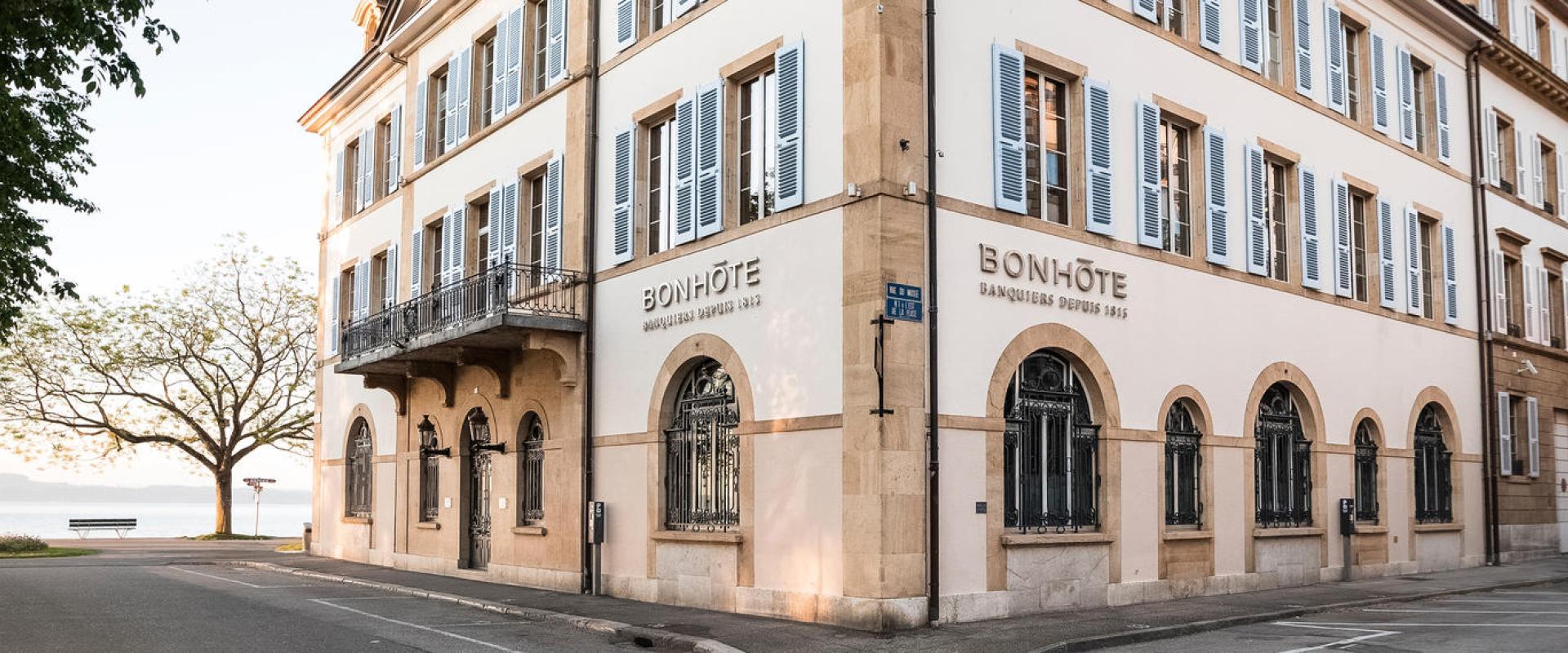
Bank Bonhôte is pleased to welcome you and puts at your disposal its finance experts.




–
USD/CHF | EUR/CHF | SMI | EURO STOXX 50 | DAX 30 | CAC 40 | FTSE 100 | S&P 500 | NASDAQ | NIKKEI | MSCI Emerging Markets | |
|---|---|---|---|---|---|---|---|---|---|---|---|
Latest | 0.82 | 0.91 | 14796.50 | 6170.49 | 25820.36 | 8139.00 | 10673.94 | 7376.86 | 24579.42 | 57434.77 | 834.16 |
% 5 days | 0.06 | -0.14 | -0.10 | 0.64 | 0.01 | 2.13 | -0.47 | -2.67 | -3.37 | -9.25 | -4.08 |
% YTD | 3.26 | -1.74 | 14.96 | 9.41 | 5.43 | 2.87 | 10.41 | 8.77 | 6.26 | 15.87 | 8.83 |
(values from the Friday preceding publication)
After an initial positive reaction—driven in part by hopes for a de-escalation of the conflict in the Middle East—financial markets came under pressure. Technology stocks and semiconductors were particularly hard hit, as investors focused on the risk of stricter regulation of artificial intelligence and data centers. One reason for this is the significant level of U.S. investment in artificial intelligence. Some investors fear that Democratic victories could hinder the rapid development of data centers.
Economic data, however, confirmed the strength of economic activity. The ISM Manufacturing Index rose to 55.5 points, compared with an expected 54.5. Industrial orders rose 1.8% in September, exceeding expectations of 1.2%. The jobs report showed 165,000 new jobs created in October, compared with a consensus estimate of 65,000, an unemployment rate of 4.1%, and upward revisions of 84,000 for August and September. Hourly wages rose 0.4% month-over-month and 3.1% year-over-year. This resilience reduces the likelihood of rapid monetary easing and keeps the Fed facing a delicate trade-off between growth and inflation.
European markets initially benefited from a more favorable environment before feeling the fallout from the U.S. correction. On the economic front, manufacturing indicators remain relatively resilient, with the manufacturing PMI coming in at 52.7 points in October, compared with an expected 52.4. Inflation in October reached 4.0%, in line with the consensus. Energy prices rose 20.8% year-over-year, while core inflation remained at 2.5%, demonstrating that the shock is primarily imported, even though the rise in service prices—estimated at 3.3% versus 3.2%—signals the beginning of broader-based inflation.
In Switzerland, the index’s defensive composition—dominated by pharmaceutical stocks, consumer staples, and financials—helped cushion the technology-driven shock. The Swiss market remains exposed to global volatility, but its sectoral profile continues to provide relative stability. Swiss inflation reached 1.5% year-over-year in October, the highest level since December 2023 and above expectations. However, it remains within the SNB’s target range; the central bank retains greater flexibility in implementing its monetary policy than its counterparts, especially as the franc has reached seven-week highs, which mitigates imported inflation.
Oil prices fell by about 13%, dropping from USD 113 to around USD 98 by the end of the week. Investors are pricing in a de-escalation, with Qatar acting as a mediator, but the risk premium remains fragile: attacks on ships continue, and Iran is making the reopening of the Strait of Hormuz contingent on concessions. Gold gained about 5% as sovereign yields fell early in the week, before losing ground on Friday, and continues to play an important role as a safe-haven asset and a diversification tool in portfolios.
The decline in oil prices, if confirmed, reduces the risk of an inflationary spiral, but U.S. employment data and European inflation continue to point toward tighter monetary policy. The New York Fed’s one-year inflation expectations and a speech by Governor Bailey will be closely watched. However, ongoing discussions between Washington and Tehran remain the primary exogenous factor.

Convinced that every relationship is UNIQUE, we carefully craft individualised solutions.
We invite you to schedule an appointment with our experts using the form below.
This document is provided for your information only. It has been compiledfrom information collected from sources believed to be reliable and up to date, with no warranty as to its accuracy or completeness.By their very nature, markets and financial products are subject to the risk of substantial losses which may be incompatible with your risk tolerance.Any past performance that may be reflected in this documentis not a reliable indicator of future results.Nothing contained in this document should be construed as professional or investment advice. This document is not an offer to you to sell or a solicitation of an offer to buy any securities or any other financial product of any nature, and the Bank assumes no liability whatsoever in respect of this document.The Bank reserves the right, where necessary, to depart from the opinions expressed in this document, particularly in connection with the management of its clients’ mandates and the management of certain collective investments.The Bank is a Swiss bank subject to regulation and supervision by the Swiss Financial Market Supervisory Authority (FINMA).It is not authorised or supervised by any foreign regulator.Consequently, the publication of this document outside Switzerland, and the sale of certain products to investors resident or domiciled outside Switzerland may be subject to restrictions or prohibitions under foreign law.It is your responsibility to seek information regarding your status in this respect and to comply with all applicable laws and regulations.We strongly advise you to seek independentlegal and financial advice from qualified professional advisers before taking any decision based on the contents of this publication.
Bank Bonhôte is pleased to welcome you and puts at your disposal its finance experts.

Bank Bonhôte is pleased to welcome you and puts at your disposal its finance experts.

Bank Bonhôte is pleased to welcome you and puts at your disposal its finance experts.

Bank Bonhôte is pleased to welcome you and puts at your disposal its finance experts.

Bank Bonhôte is pleased to welcome you and puts at your disposal its finance experts.